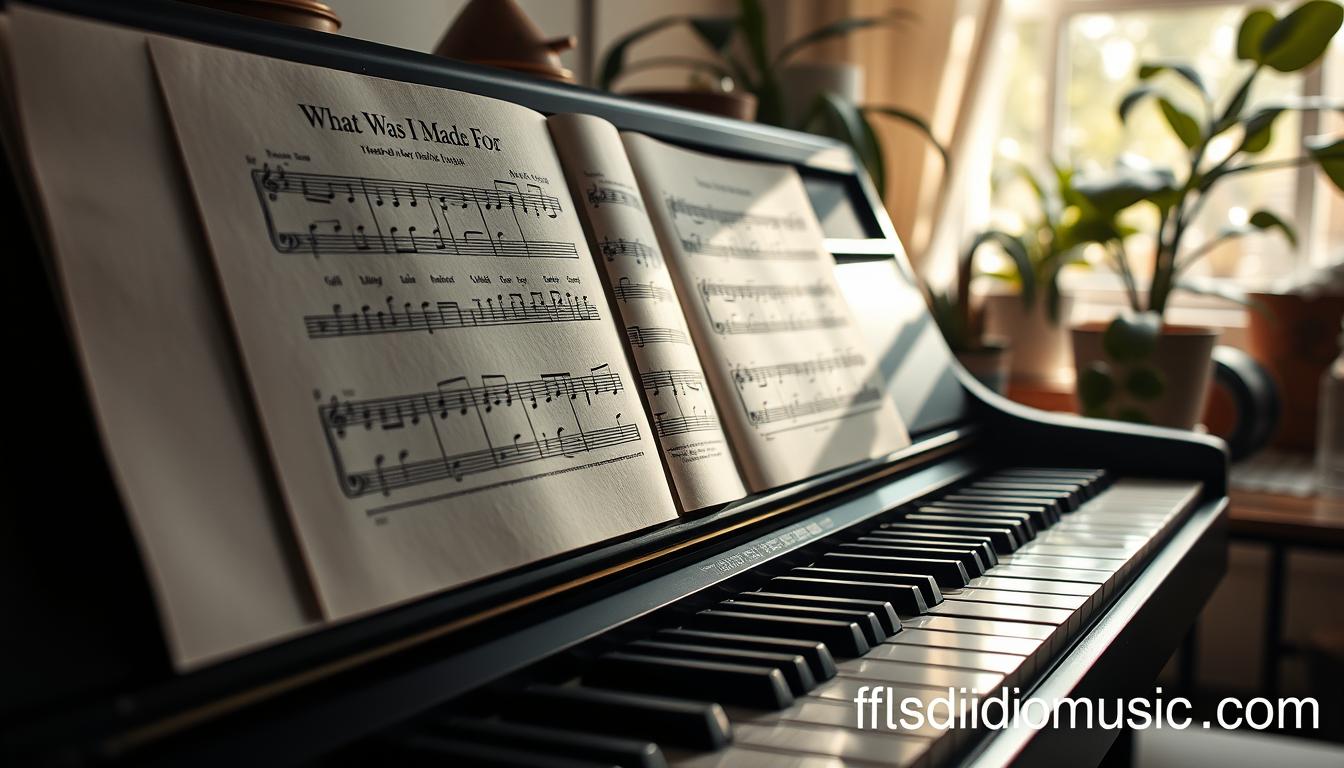
Are you ready to explore the beautiful melodies of “What Was I Made For” by Billie Eilish? This song, from the “Barbie” movie soundtrack, has won many hearts. In this piano tutorial, I’ll show you how to play the what was I made for chords piano. It’s perfect for beginners.
I believe with the right techniques and resources, you can improve your skills and enjoy playing music. This article will cover key concepts. You’ll learn about the easy piano chords for “What Was I Made For” and how to avoid common mistakes.
The song is classified as “Super Easy,” making it great for mobile or tablet devices. The recommended playing time for the music sheet is just 00:19. With my help, you’ll find learning fun and rewarding.
Key Takeaways
- Step-by-step instructions for what was I made for piano tutorial.
- A breakdown of the essential chords used in the song.
- Insights into the song’s context and emotional impact.
- Practice tips tailored for beginners and intermediate players.
- Resources for finding piano sheet music and online tutorials.
- Encouragement to share progress and connect with music communities.
Understanding the Song and Its Context
“What Was I Made For” is a moving song by Billie Eilish from the “Barbie” movie soundtrack. It explores themes of identity and self-discovery, touching many listeners. Playing it on the piano adds to its emotional impact.
The song’s lyrics are about personal reflection, appealing to fans and newcomers. Exploring this song, I see how its melody and themes deeply engage us. Playing “What Was I Made For” on the piano sparks curiosity and creativity in me.
Understanding the emotional depth of “What Was I Made For” by Billie Eilish enhances my piano playing. Each note I play carries the song’s emotional weight, sharing its heartfelt message.
What Was I Made For Chords Piano
Learning the chords for “What Was I Made For” is key for pianists. This song has emotional depth and subtlety. It can be tricky to switch chords smoothly, especially for beginners. I’ll cover the main chords and some variations to improve your playing.
Overview of the Chords Used
The chords in “What Was I Made For” create a rich background for the melody. Here’s a quick look at these chords:
| Chord | Fingering | Notes |
|---|---|---|
| C Major | 1-3-5 | C-E-G |
| G Major | 1-3-5 | G-B-D |
| Am | 1-3-5 | A-C-E |
| F Major | 1-3-5 | F-A-C |
Common Mistakes to Avoid
While learning “What Was I Made For,” I hit a few common hurdles. Here are some mistakes to steer clear of:
- Incorrect finger placement: Make sure you’re using the right fingers for each chord. This helps with smooth transitions.
- Omitting notes: Focus on playing all notes in a chord. Missing one can mess up the harmony.
- Ignoring timing: Use a metronome to keep the rhythm right.
By avoiding these mistakes, you can avoid getting stuck. Practice and patience are key. With time, playing these chords will become second nature.
How to Play What Was I Made For on Piano
Playing “What Was I Made For” can be both fun and challenging. I’ll show you how to master it and improve your skills. We’ll cover finger placement, chord transitions, and memorization techniques.
Step-by-Step Instructions
Here are the essential steps to get you started:
- Familiarize yourself with the key: Learn the key signature first. It helps with finger placement and chord changes.
- Begin with the right hand: Start with the melody. Make sure you play it correctly.
- Introduce the left hand: Add the left-hand chords once you’re comfortable with the melody.
- Practice chord changes: Smoothly transition between chords. Chords should feel natural together.
- Memorize sections: Break the song into smaller parts. Memorizing in sections is easier.
- Combine both hands: Slowly bring the right and left hands together. Start at a slow tempo.
Practice Tips for Beginners
Here are some tips to improve your practice:
- Break the song into parts to avoid feeling overwhelmed. Focus on one section at a time.
- Use slow practice. It builds accuracy and muscle memory well.
- Record your practice. Listening back can show you what needs work.
- Play with a metronome. It helps with steady rhythm and timing.
- Don’t rush. Enjoy the learning, and celebrate small wins.
Essential Piano Notes for What Was I Made For
Learning the essential piano notes for “What Was I Made For” is key for a great performance. As we go through the song, note the placement and order of the notes. Timing and rhythm are crucial in bringing out the song’s emotional depth.
Note Breakdown for Each Section
The song’s structure includes different chords and notes. Here’s a detailed look at the notes in each part:
| Section | Piano Notes | Chords Used |
|---|---|---|
| Intro | A, C#, E | A Major |
| Verse | F#, G#, A, B | F# Minor, G# Minor |
| Chorus | C, E, G, F | C Major, F Major |
| Bridge | D, A, E | D Major, E Major |
Timing and Rhythm Explanation
The song mainly has a 4/4 time signature, which gives it a steady beat. Each measure has four beats, and a quarter note gets one beat. Here are some timing tips:
- Use of Rests: Rests help give each phrase a breath, making the emotional delivery better.
- Syncopation: Let the music guide you, allowing some notes to fall off the beat for a more expressive play.
- Consistent Tempo: Keep the pace even, making sure the transitions between sections are smooth.
Getting good at playing “What Was I Made For” on the piano takes time and effort. By focusing on these points, you’ll improve your performance.
Easy Piano Chords for What Was I Made For
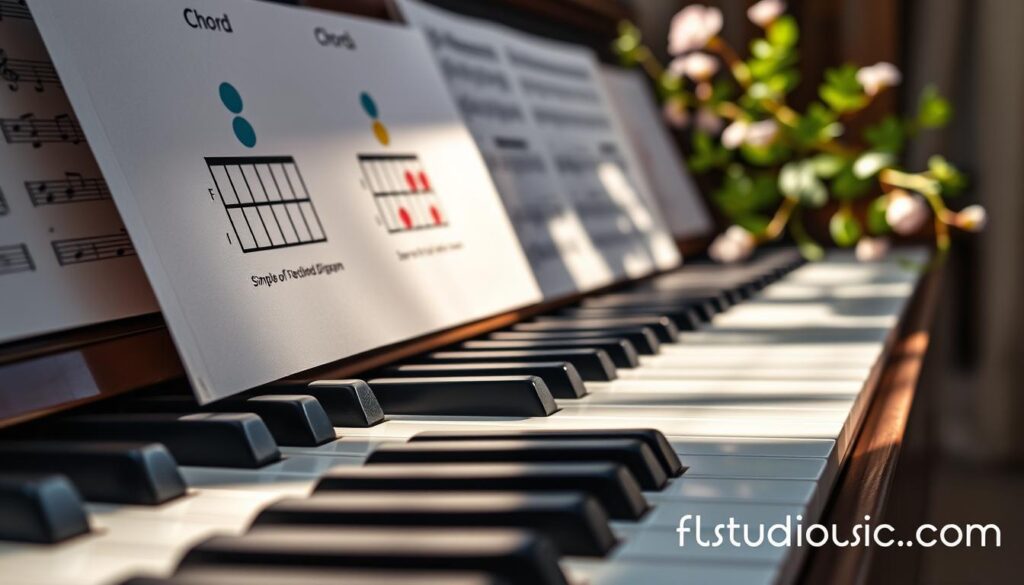
Learning the easy piano chords for “What Was I Made For” helps me play this emotional song better. It connects me to the song’s heart, making it easy for musicians of all levels. I’ll explain the chords used in the intro and chorus, keeping it simple yet emotionally rich.
Chords Used in the Intro
The intro uses a few simple chords to set the mood. The main chords are:
- C Major
- A Minor
- G Major
- F Major
These chords create a beautiful atmosphere, perfect for the song’s emotional tone. I suggest practicing each chord alone. Then, blend them smoothly into the progression.
Chorus Chord Progression
The chorus brings a slight change but keeps the song’s emotional story. The usual sequence is:
| Chord | Duration |
|---|---|
| C Major | 2 beats |
| A Minor | 2 beats |
| G Major | 2 beats |
| F Major | 2 beats |
Using these chords in your playing can make your performance more emotional. Focus on smooth transitions between chords. This will help the music connect deeply with your audience.
Piano Arrangement for What Was I Made For
Exploring piano arrangements for “What Was I Made For” is key. It’s important to try different styles to really feel the song. Each style can bring out different emotions, making it fun to experiment.
Different Styles to Explore
- Classical: This style focuses on the original melodies, offering a deep, expressive feel.
- Jazz: Adding jazz chords and improvisation gives a fresh, unique spin.
- Ambient: Mixing synthesizers or soft pads with piano creates a calm, emotional atmosphere.
- Pop: Using simple chords and a strong beat makes the song lively and easy to follow.
Using Dynamics for Emotional Effect
Getting the dynamics right in your piano arrangement is crucial. Soft playing in quiet parts adds sensitivity. Then, switching to loud, powerful chords shows passion and intensity. This contrast can convey a deep message.
Finding What Was I Made For Piano Sheet Music
Finding the right resources for what was I made for piano sheet music can greatly improve your playing. There are many online platforms with a wide variety of arrangements. I’ll show you some of the best places to find this sheet music.
Recommended Online Resources
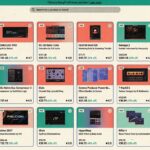
Musicnotes is a top choice for what was I made for piano sheet music. It offers 68 arrangements instantly, making it easy to find what you need quickly. Talented composers like The Theorist and Dario D’aversa have created popular arrangements.
The sheet music is for many instruments, including Piano, Voice, and Guitar. You can find a version that fits your skill level and preferences. Most arrangements are priced at $24.99, making it affordable.
Tips for Reading Sheet Music
Learning to read sheet music is key for any pianist. Here are some tips to improve your skills:
- Start by getting to know the staff, including the lines and spaces for both treble and bass clefs.
- Practice identifying notes quickly to build muscle memory when playing.
- Focus on key signatures and time signatures, as they give important information about the piece.
- Break the music into smaller sections to make it easier to learn and practice.
Learning What Was I Made For on Piano
Starting my journey to learn what was I made for on piano, I’ve found online resources to be incredibly helpful. Many websites and platforms offer tutorials and videos for all skill levels. These resources help me understand the song’s parts better and improve my playing.
Online Tutorials and Performance Videos
Online, there are many sites that teach you how to play piano songs. YouTube is full of tutorials by skilled pianists who walk me through each part of the song. They share tips on playing techniques and details that make my playing better. Channels focused on pop songs are especially useful for finding the right content.
Community Support and Forums
Getting help from others is key when learning a new song. Sites like Reddit and Facebook groups are great for connecting with other musicians. We share tips, ask questions, and celebrate each other’s progress. This support boosts my learning and keeps me motivated.
| Platform | Type of Resource | Popular Channels |
|---|---|---|
| YouTube | Video Tutorials | Billie’s Piano Tutorials, Virtual Piano Lessons |
| Community Forums | r/piano, r/musicians | |
| Groups | Billie Eilish Fans, Piano Learning Community | |
| Virtual Piano | Interactive Sheet Music | Leaderboard with scores |
Tips for Enhancing Your Piano Skills
Improving at the piano is more than just learning songs. Using different practice methods can really help. Here are some tips to improve your piano skills and connect more with the music.
Practicing Regularly
Being consistent is crucial for better piano skills. I aim to practice every day. I focus on important techniques like:
- Scales: These build finger strength and agility.
- Arpeggios: They make playing feel smooth and connected.
- Hanon exercises: These improve dexterity and control.
Having a set practice time helps me learn better. I start with tough parts to improve my playing.
Importance of Listening to the Original
Listening to the original song is key. It helps me understand the music’s nuances and feel. I pay close attention to the song’s dynamics and phrasing.
Recording my practice helps me spot mistakes. It shows me what I need to work on. I practice a bit before tricky parts to play smoothly.
Trying out extended chords, like the 9th or 11th, adds depth to my playing. Using drop 2 chords creates subtle, emotional sounds. Keeping good posture and understanding rhythm are also important for better performances.
| Tips | Description |
|---|---|
| Daily Practice | Setting a specific schedule to practice various techniques to strengthen skills. |
| Listening | Engaging with the original track to internalize its nuances and emotional depth. |
| Record Yourself | Identifying mistakes and areas for improvement by reviewing recordings. |
| Focus on Techniques | Incorporating scales, arpeggios, and Hanon to enhance finger strength. |
Sharing Your Progress and Getting Feedback
Learning piano is more fun when you share it with others. I suggest using social media and local music groups to show off your skills. Social media lets you connect with other musicians and get feedback. Local groups offer a chance to meet people face-to-face, making it easier to get helpful advice.
Using Social Media Platforms
Social media is great for musicians. Sites like Instagram, Facebook, and YouTube let you share your music. This way, you can get feedback and stay inspired by others.
Joining Local Music Groups
Local music groups are perfect for meeting other musicians. They have meet-ups and jam sessions where you can share your music. Getting feedback from others can really help you improve.
Conclusion
Learning “What Was I Made For” on piano is a rewarding journey. It covers both the technical and emotional sides of music. The song is in the key of C and uses only white notes, making it easy for beginners but also deep for those who explore more.
I’ve shared many resources and tips to help you enjoy and improve your piano playing. This song is loved by many, especially young people looking for their purpose in life. It starts conversations and talks about mental health openly.
As you practice, remember that each session gets you closer to the music and better at playing. Start with basic chords like triads. Then, move on to more complex chords and their sounds. Keep practicing, as it’s the best way to get better at playing “What Was I Made For” on piano.
FAQ
What are the chords for “What Was I Made For” on piano?
The main chords are C, G, Am, and F. It’s a simple song, great for beginners.
Can you recommend a tutorial for playing “What Was I Made For” on piano?
Yes, YouTube has many tutorials. They show how to place your fingers and change chords step by step.
Where can I find piano sheet music for “What Was I Made For”?
Look on MusicNotes and Sheet Music Plus. They have free and paid sheet music.
What are some common mistakes when learning “What Was I Made For” on piano?
Mistakes include wrong finger placement and missing notes. Practice slowly and focus on accuracy.
How can I simplify playing “What Was I Made For” for easier practice?
Start with the main chords. Break the song into parts. Practice each part before putting them together.
What techniques can I use to improve my timing and rhythm while playing?
Listen to the song’s rests and syncopation. A metronome helps keep a steady beat during practice.
How can I enhance the emotional impact of my performance of “What Was I Made For”?
Play some parts softly and others loudly. This adds emotion to your performance.
Are there any online resources for tutorials on “What Was I Made For”?
Yes, YouTube and Ultimate Guitar have many tutorials and videos to help you learn.
How often should I practice to see improvement?
Practice daily, at least 30 minutes. Focus on specific parts and build your skills slowly.
What should I do if I want feedback on my piano playing?
Share your playing on social media or join local music groups. You’ll get feedback from other musicians.
Source Links
- https://virtualpiano.net/music-sheet/what-was-i-made-for-billie-eilish/
- https://greenemusic.com/blog/understanding-piano-chords-everything-you-need-know?srsltid=AfmBOoprxyGzld9B6Vr2re2OCDFKMBJa9mHpkvbDP0D_vuRA8iJ1cKdD
- https://www.skoove.com/blog/piano-chords/
- https://www.schoolofrock.com/resources/keyboard/piano-chords-for-beginners-what-you-need-to-know
- https://www.pianote.com/blog/how-to-read-piano-notes/
- https://www.fineartsmatter.com/resources/piano-chords-for-beginners
- https://www.musicnotes.com/sheetmusic/what-was-i-made-for/128301
- https://www.sheetmusicplus.com/en/product/what-was-i-made-for-22546323.html
- https://pianoground.com/7-ways-to-make-your-chords-more-interesting-tips-for-piano-beginners/
- https://thevault.musicarts.com/useful-tips-to-improve-your-piano-playing/
- https://www.pianote.com/blog/how-to-get-better/
- https://www.skoove.com/blog/chord-progressions-on-piano/
- https://kandmmusicschool.com/blogs/piano-lessons/assessing-your-childs-technical-progress-on-the-piano/
- https://pianowithjonny.com/membership/
- https://www.irish-folk-songs.com/what-was-i-made-for-piano-letter-notes-and-tin-whistle-tab-by-billie-eilish.html
- https://greenemusic.com/blog/understanding-piano-chords-everything-you-need-know?srsltid=AfmBOor_YN8WuC1E11DIQC6SHaAbTFDnnbga2aP40tj0ZUSn1oeA0Oed
- https://pianowithjonny.com/piano-lessons/piano-chords-the-definitive-guide/