Welcome to our journey into the world of hand drums. We’ll explore the many types of hand drums that add richness to music worldwide. We’ll look at djembes, congas, and bongos, and how they play a big role in culture. We’ll also dive into their history, how they’re classified, and what makes their rhythms special.
I love world percussion and think knowing about hand drums makes their sounds and making them even more interesting. In this piece, I’ll share how hand drums are made, give tips for new players, and talk about the good things about drumming. Drumming can help with coordination and even calm you down.
Key Takeaways
- Djembes, congas, and bongos are distinct types of hand drums.
- Playing hand drums can enhance motor skills and coordination.
- Drumming offers stress relief and promotes relaxation.
- Joining a hand drumming group fosters community and shared passion.
- Regular practice is crucial for developing rhythm and drumming skills.
- Basic techniques are essential for beginners to build upon.
Introduction to Hand Drums
Hand drums are incredibly versatile and fun hand percussion instruments. They are easy to carry and play, making them perfect for musicians of all levels. Playing them can improve hand-eye coordination, reduce stress, and boost creativity. I find that they enhance my rhythm and serve as a powerful way to express myself.
Hand drums play a big role in many cultures. They add excitement to community events and depth to cultural rituals. Learning to play them introduces you to techniques like proper hand placement and basic strokes. Regular practice helps avoid mistakes and makes drumming rewarding.
For new players, starting with simple rhythms is a good idea. This could be a four-beat pattern or the djembe bass tone. Building these basics is key to improving. Listening to other drummers also helps and makes learning more enjoyable. With dedication, hand drums become a source of creativity and connection.
Historical Significance of Hand Drums
Hand drums have a long history, dating back before 6000 BC. They are important in many cultures around the world. These drums connect us to rituals, celebrations, and community.
In African culture, hand drums are key to traditions. They reflect the rhythms of life and social events. The djembe, from West Africa, is made from one piece of wood and has a goat skin head. This makes it special in African music.
Hand drums have changed over time. European colonization in the 1500s mixed cultures, affecting hand drums in the Americas. Today, we have electric hand drums, but many prefer the sound of traditional ones.
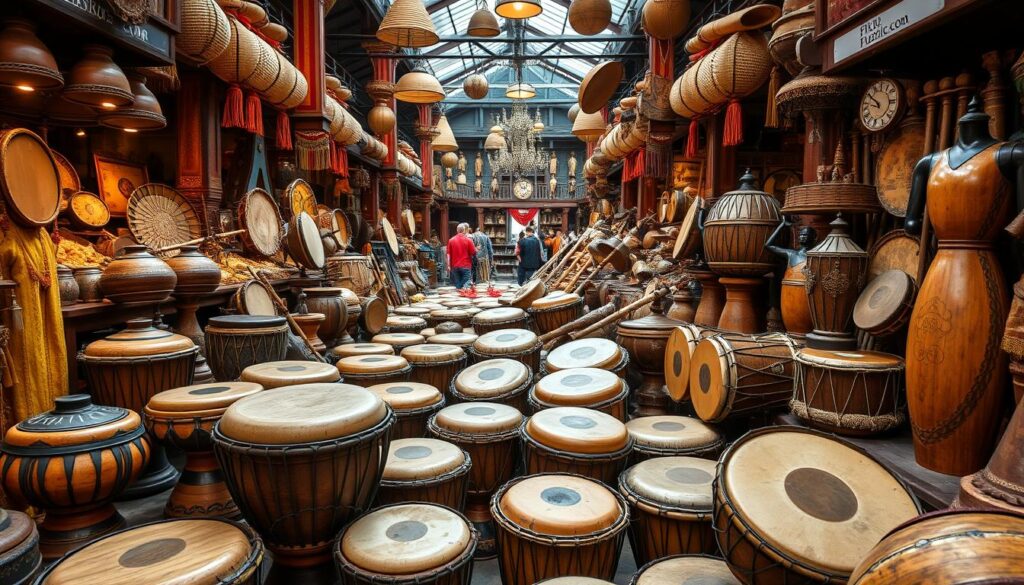
Hand drums are found everywhere, like the tall conga drums of Cuba and the bodhran in Irish music. They are also used in belly dancing. Playing hand drums can help with meditation and exercise, and it connects us to our culture.
The importance of drums shows a universal language of rhythm. It brings people together through time. Learning about hand drums’ history makes me appreciate their role in music worldwide.
Classification of Hand Drums
Hand drum classifications help us understand their different styles and sounds. There are two main ways to classify them: by playing technique and by construction material. Each method highlights the unique qualities and uses of these instruments.
Classification by Playing Technique
Hand drums are grouped by how they are played, each with its own sound and feel:
- Friction Drums: Drums like the cajon and rubab make sound when the player’s hand rubs against the drum.
- Frame Drums: Bodhráns and tambourines are handheld and versatile, making them easy to play.
- Goblet Drums: Drums like the djembe and darbuka are known for their deep, rich tones.
- Barrel Drums: Dhol and congas have a cylindrical shape and produce deep, resonant sounds.
Construction Material Classification
Hand drums are also classified by their construction materials. Different materials affect the sound and how they play:
| Material | Description | Sound Characteristics |
|---|---|---|
| Wood | Often used for drum shells | Rich, warm tones that resonate well |
| Metal | Used in modern drums | Sharp, clear sounds with sustain |
| Ceramic | Used in many cultures | Bright, sharp sounds, often in folk music |
| Synthetic | A modern, durable option | Consistent sound, less maintenance needed |
Types of Hand Drums
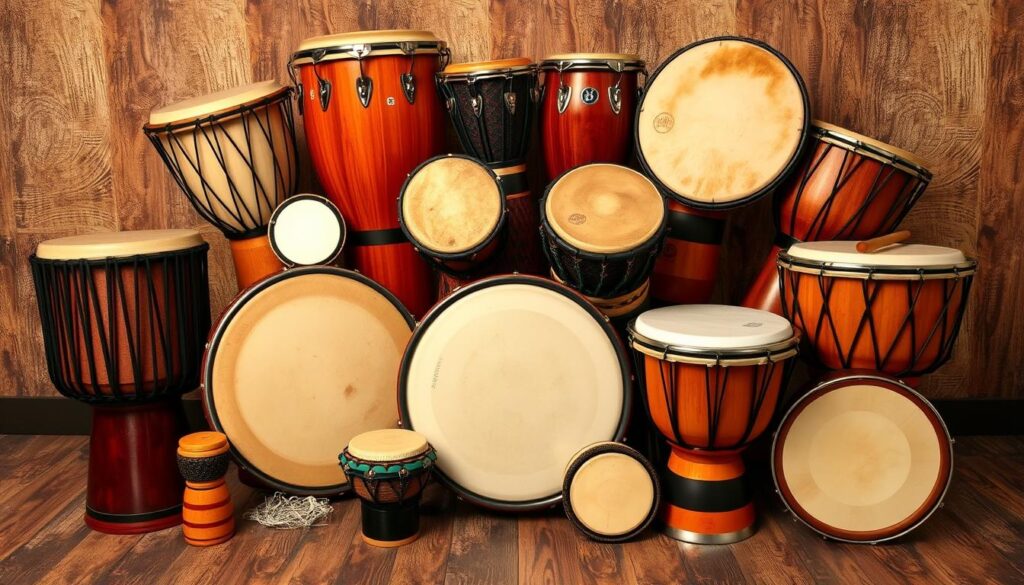
Hand drums come in three main types, each with its own sound and cultural importance. They differ in design and how you play them. This variety lets musicians express themselves in unique ways.
Goblet Drums: Rich Tones and Heritage
Goblet drums are known for their deep sounds and rich history. The djembe, for example, can make a wide range of sounds. From deep bass to bright slaps, it’s loved in Western music.
The udu, shaped like a clay pot from Nigeria, also offers a wide sound range. A special hole on the side lets players explore different sounds in their rhythm.
Cylindrical Drums: A Foundation in Rhythm
Cylindrical drums, like congas and bongos, are key in many music styles. Congas, with roots in Afro-Cuban music, are especially famous. A full set has three drums: the tumba, conga, and quinto.
Models like the LP Galaxy Giovanni Series Congas are known for their strong sounds. They’re perfect for classic salsa. Bongos, smaller and from Cuba, are also versatile, with synthetic shells and heads for modern music.
Frame Drums: Versatile and Accessible
Frame drums, like the tambourine and bodhrán, are both versatile and easy to play. The tambourine adds to many music styles with its jingles. The bodhrán, played with bare hands, supports Irish folk music.
These drums are great for beginners and experts alike. They make it simple for anyone to join in the rhythm.

| Drum Type | Key Characteristics | Cultural Origin | Example Instruments |
|---|---|---|---|
| Goblet Drums | Rich tones; versatile | Africa | Djembe, Udu |
| Cylindrical Drums | Rhythmic foundation; various sizes | Latin America | Conga, Bongo |
| Frame Drums | User-friendly; diverse application | Worldwide | Tambourine, Bodhrán |
Popular Hand Drums Around the World
Exploring hand drums shows us the rich musical traditions of cultures worldwide. Each drum has its own history and importance. They range from Africa’s vibrant rhythms to Latin America’s lively sounds. These drums are key in both traditional and modern music.
Djembe: The Iconic African Drum
The djembe comes from West Africa and has a single head. It makes different sounds, making it great for many musical settings. In the U.S., it’s loved by both new and experienced players. It helps with coordination and brings people together.
Conga: A Latin American Staple
Conga drums are tall and narrow, known for their deep sound. They’re vital in Afro-Cuban music, like salsa and rumba. Congas are also used in many modern bands. Their lively sound draws in listeners and dancers.
Bongos: Energetic Duo from Cuba
Bongos are two small drums played together, creating a lively sound. They’re key in Latin and popular music, adding excitement to live shows. The way the two drums work together shows the player’s skill and creativity.
| Drum Type | Origin | Characteristics | Cultural Significance |
|---|---|---|---|
| Djembe | Africa | Single-headed, versatile tones | Community building, educational use |
| Conga | Cuba | Tall, narrow, rich sound | Integral to Afro-Cuban music |
| Bongos | Cuba | Small, paired, energetic rhythms | Popular in various music genres |
Construction Techniques of Hand Drums
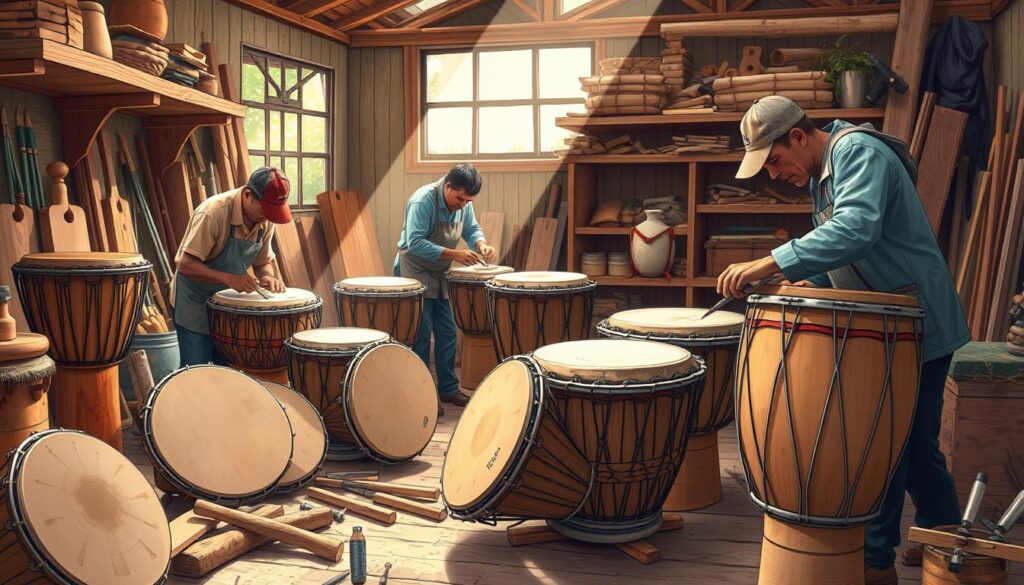
Hand drums are made using different techniques that affect their sound and feel. The materials and shapes used show the skill in making various hand drum styles. This part talks about drum making, focusing on the key choices that define the drum.
Materials Used in Drum Making
Hand drums are made from many materials, each adding to their unique sound. Common materials include:
- Shell materials: Wood like maple, birch, and mahogany are used, with thicknesses from ¼” to ½”.
- Drumheads: Goat skin is popular for its durability and warm sound, along with cowhide and synthetic materials.
- Tuning hardware: Chrome-plated lugs, tension rods, and washers are used for durability and to prevent rust.
- Lacing: Nylon and leather are used for lacing, with leather being stronger and more traditional.
Shapes and Sizes of Hand Drums
The shape and size of hand drums greatly impact their sound. For example, frame drums have a head diameter larger than the shell’s depth. These drums are usually held in the hand and played with fingers. Key features include:
- Frame drums vary in size and depth, sometimes with small cymbals or snares for added complexity.
- These drums are deeply connected to the music of the Middle East, North Africa, and the Caucasus, known as tar, daff, riq, and pandeiro.
- Playing techniques can vary, with some musicians bending pitches or striking small cymbals.
- Outside these regions, similar drums exist in Eastern Europe, Portugal, and Brazil, showing the wide range of hand drum styles.
| Material | Purpose | Common Usage |
|---|---|---|
| Wood (Maple, Birch, Mahogany) | Shell construction | Most hand drums |
| Goat Skin | Drumhead | Preferred for its tone |
| Chrome plating | Tuning hardware | Durability and corrosion resistance |
| Leather Lacing | Structural strength | Common in traditional drums |
These elements come together to create a rich and varied world of hand drum making. Every choice made during the making process affects the drum’s sound and feel. This enriches music across many cultures.
Hand Percussion Instruments Beyond Drums
Hand percussion instruments are key in making music richer and more diverse. They go beyond just hand drums. The cajón, tambourine, and maracas show the many ways rhythm can be explored in different cultures.
These instruments have deep histories. Maracas come from the Taino people of Puerto Rico and are vital in Latin music. The tambourine, with Near Eastern roots, is used in both ancient rituals and today’s music, showing its wide appeal.
Exploring hand percussion, I found the kalimba, a modern take on the mbira. It has enriched music for over a thousand years. Each instrument lets artists share feelings and stories through sound.
- Accessibility: Easy-to-play instruments like maracas and tambourines welcome everyone, no matter their age or skill.
- Materials: Hand percussion instruments are made from wood, PVC, and fiberglass. This shows both tradition and new ideas in their making.
- Variety: There’s more than just drums. The cajón and steel pan add unique sounds to the mix.
Learning about hand percussion instruments helps us understand rhythm, music, and culture better. Playing these instruments lets us appreciate the deep connection between sound and emotion in music.
Exploring Different Hand Drum Types
Hand drum types show a wide range of instruments, each with its own special traits and cultural importance. The djembe, from West Africa, is known for its deep sounds. Congas add rhythm to Latin music. Bongos, played in pairs, bring energy to music.
The darbuka is key in Middle Eastern music, making sharp sounds. The tombak, important in Persian music, is versatile and has rich tones. Handpans, popular lately, come in styles like Integral and Celtic, making soft, melodic sounds.
Hand drums are different from other percussion instruments. They are played with hands, allowing for many techniques and sounds. Frame drums, like the tambourine, have a design that makes their sound better.
- Factors to Consider When Choosing a Hand Drum:
- Type of drum
- Material used
- Sound quality
- Your budget
When picking a hand drum, think about the material. Traditional drums use wood and animal skins. Modern ones use spun-aluminum and mylar for lasting quality. The material affects the drum’s sound and how it resonates.
How you play the drum matters too. Basic strokes like open tones and slaps are the start. As you get better, learning more complex rhythms helps.
Hand drums from around the world show the rich culture and creativity in percussion. They have been used for ceremonies and in modern music. Hand drums connect past and present, showing history and innovation.
Hand Drum Varieties in Cultural Contexts
Hand drums play a big role in cultures worldwide. They add to music and hold deep cultural values. In different places, they’re used in ceremonies, rituals, and celebrations. This part will look at their traditional and modern uses, showing their lasting impact.
Traditional Uses of Hand Drums
Hand drums have been part of culture for ages. In Africa, the djembe is key in social events and stories. The batá drums of the Yoruba people are used in spiritual events. Each area has its own hand drum types, like:
- Cajón: A box drum from Peru, used in Afro-Peruvian folk music.
- Tabla: Essential in Indian classical music, played with fingers and palms.
- Darbuka: Played in the Middle East and Balkans, known for its sound and rhythm.
These drums are more than just music. They show off different musical styles and traditions. In ceremonies and festivals, they help communities connect with their roots and identity.
Modern Applications of Hand Drums
Today, hand drums are even more versatile. They’re seen in music festivals, schools, and therapy. For example:
- Bongos: Used in Afro-Cuban jazz and salsa.
- Frame drums: Popular in many genres, for solo or group playing.
- Maracas and cowbells: Used in percussion groups for different sounds.
Drum circles and workshops show how these instruments bring people together. They offer a way to connect with rhythm and improve skills. From therapy to classrooms, hand drums are changing how we see them in culture.
Maintaining and Tuning Hand Drums
Keeping hand drums in good shape is key to their long life and sound quality. It’s important to know how to tune them right. This makes playing them better and keeps the drums in great condition.
Drums made of wood or ceramic need oil to stay looking good and avoid cracks. Drums with varnish or lacquer just need a quick clean and wax now and then. Taking care of them this way keeps them sounding great.
The drumhead’s quality affects the sound a lot. Single-ply heads give a brighter sound, while double-ply heads are warmer. Changing drumheads twice a year keeps the sound clear during shows. Drumheads make up about 80% of the drum’s sound.
Using treatments like shea butter on the drumhead helps it stay moist. This is especially true for goat skin heads. Too much moisture can damage them.
| Maintenance Task | Frequency | Notes |
|---|---|---|
| Change drumheads | Twice a year | More often for heavier use |
| Replace resonant heads | Every 2-3 years | Yearly for frequent use |
| Inspect cymbal hardware | Every 2 years | Based on the level of use |
| Apply teak or linseed oil | Every few months | For unfinished wood drums |
| Replenish natural wood oils | Every 4-6 months | Interior application recommended |
Learning how to tune and maintain hand drums makes them last longer. It also makes playing them more enjoyable. This way, every performance sounds its best.
Conclusion
Exploring the types of hand drums shows us their rich diversity and importance in music worldwide. The djembe’s rhythm is key in West African ceremonies. The tonbak’s sound is loved in Persian communities. Each drum has its own story and cultural value.
Hand drums are not just for traditional music. They play a big role in today’s music too. The tambourine is essential in pop and folk music. The conga and tabla mix different cultures, adding depth to global music.
Learning about hand drums helps us appreciate their role in creativity and community. They offer physical and mental benefits, like stress relief and better coordination. By exploring hand drumming traditions, we enrich our musical world.
FAQ
What are the main types of hand drums?
Hand drums include goblet drums like the djembe and darbuka. Cylindrical drums are congas and bongos. Frame drums are the tambourine and bodhrán. Each has its own special features and cultural importance.
How do the playing techniques differ among hand drums?
Playing hand drums involves striking, rubbing, and shaking. Goblet drums are hit with the hands. Frame drums might also be shaken for extra rhythm.
What materials are commonly used in hand drum construction?
Hand drums use many materials. Animal skins are traditional for drumheads. Modern drums might have synthetic materials. The body can be wood, metal, or ceramic, affecting the sound.
How have hand drums evolved in modern music?
Hand drums fit into today’s music, seen at festivals and in education. They bring creativity and connect old rhythms with new styles.
What is the significance of hand drums in cultural rituals?
Hand drums are key in cultural rituals. They help with communication, celebration, and spiritual events. Their deep connection to culture is vital in many ceremonies.
How can I maintain and tune my hand drum?
Keep your hand drum clean and adjust the drumhead tension. Choose the right materials for repairs. Tuning methods depend on the drum type, aiming for the best sound.
Are there other hand percussion instruments I should consider?
Yes, there’s more than drums. Consider the cajón, tambourine, and steel pan. These instruments add to the rhythm in music.
Source Links
- https://www.x8drums.com/blog/hand-drums-101-techniques-and-tips-for-beginners/?srsltid=AfmBOooiZW8YFGdmcVOnCp7ZWRUhPDyhunJWjnORKB168FTmOugFiREj
- https://www.gear4music.com/blog/different-types-of-drums/
- https://www.gearank.com/types-of-drums/
- https://www.x8drums.com/blog/hand-drums-101-techniques-and-tips-for-beginners/?srsltid=AfmBOorvHbM8R76P0zEHnimQR2apyWWGbB4J4B8Znd4gB5Bx4TwoEmH8
- https://www.schoolofrock.com/resources/drums/beginners-guide-to-types-of-drums
- https://medium.com/@balidrumfactory/the-evolution-of-hand-drums-540edd21451b
- https://www.kopfpercussion.com/blog/hand-drums-a-fundamental-part-of-music-history/
- https://thesoundartist.com/blogs/news/different-types-of-hand-drums-and-percussion-instruments
- https://en.wikipedia.org/wiki/Drum
- https://www.musiciansfriend.com/thehub/world-percussion-buying-guide
- https://en.wikipedia.org/wiki/Hand_drum
- https://www.superprof.com/blog/world-drums/
- https://www.x8drums.com/blog/hand-drums-101-techniques-and-tips-for-beginners/?srsltid=AfmBOoqXTboD8pO6596H08GmxYjyVUWm__eKXywebLE4nLJUH0QTnuXY
- https://www.musikalessons.com/blog/2017/03/hand-drums/
- https://www.kopfpercussion.com/blog/the-art-of-building-hand-drums/
- https://www.bali-treasures.com/about-us/hand-percussion/
- https://www.handheldsound.com/instruments/fhp/
- https://salamuzik.com/blogs/news/types-and-common-features-of-hand-drums?srsltid=AfmBOor4J8MHW9kidu2fhPElBdbf9eN7KCo75zOI6qwoQSQtSvVTOKJ4
- https://www.drumdr.com/hand-drums.html
- https://www.x8drums.com/blog/hand-drums-101-techniques-and-tips-for-beginners/?srsltid=AfmBOorZg8d1xQhXkEBMnDwqy4tstdwJvaKEu-vyXgkIJCe8P1ddDvu4
- https://salamuzik.com/blogs/news/types-of-hand-drums?srsltid=AfmBOopv5EUPvQcrAQbf1wuUwYLpin833M084Wo_xv9zE5uTj3VyapQP
- https://www.elephantdrums.co.uk/blog/guides-and-resources/drums-from-around-the-world/
- https://www.themusicstudio.ca/drums-need-love-too-tips-for-maintaining-kits-hand-drums/
- https://www.soundonsound.com/techniques/engineers-guide-tuning-and-damping-drums
- https://thedemostop.com/blogs/instruments/drums/types-of-hand-drums/
- https://www.x8drums.com/blog/hand-drums-101-techniques-and-tips-for-beginners/?srsltid=AfmBOortwl7M6HWEOtEk3FIWsF32y_Ftn2WfO1Ldql4Pf1bWuT1yOToQ