A pop filter is key in voice recording, improving audio quality a lot. They are made to reduce unwanted noise, like plosive sounds. These sounds can distort recordings. By using a pop filter, I can stop these “pops” from the letters “P” and “B” from overloading the mic.
Pop filters also keep saliva away from the mic. This helps my equipment last longer and keeps recordings clean. Knowing how pop filters work helps me set up better recording spaces. It makes artists sound better and keeps the sound quality high.
Key Takeaways
- Pop filters mainly stop popping noises and protect microphones from saliva.
- The distance between the pop filter and the microphone affects how well it works.
- Different microphones need different pop filters.
- DIY pop filters can be cheap, made from things like pantyhose and wire coat hangers.
- Expensive pop filters have two screens for better sound.
- Condenser microphones need pop filters, but dynamic ones might not.
- Using a clean sock can also block plosive sounds if you don’t have a pop filter.
What is a Pop Filter?
A pop filter is a key tool for improving audio recordings. It has a mesh or screen that sits between the singer and the mic. This helps reduce loud sounds like ‘P’ and ‘B’ that can mess up the sound quality.
Knowing what a pop filter does is crucial for anyone making audio. It softens loud sounds to avoid distortion in recordings. The best spot for a pop filter is 2 to 6 inches from the mic.
Pop filters are common in studios but also useful at home. Some mics even have a built-in pop filter. If you don’t have one, you can make a simple one from tights or a kitchen sieve.
Using a pop filter does more than just improve sound. It also keeps the mic clean by stopping saliva buildup. Adding a pop filter to your setup can make your recordings sound much better.
The Importance of Pop Filters in Voice Recording Equipment
In professional audio recording, pop filters are key. They help reduce unwanted noises, especially during voice recordings. By blocking plosive sounds, they improve audio clarity and quality.
Pop filters have two layers of fabric to protect against explosive sounds. This design keeps recordings smooth and professional. Also, placing a pop filter a few inches from the microphone boosts sound capture.
Pop filters also protect microphones from moisture, saliva, and dust. Using a good pop filter regularly leads to cleaner recordings and less maintenance.
Choosing top-notch voice recording equipment, like Pop Audio pop filters, is wise. Studio engineers suggest durable and easy-to-use pop filters to avoid common issues.
The table below compares popular pop filter options:
| Brand | Type | Features | Price Range |
|---|---|---|---|
| Shure | Fabric | 4-layer screen, adjustable gooseneck | $30 – $40 |
| Sterling Audio | Fabric | Basic functionality, cost-effective | $15 – $25 |
| Pop Audio | Fabric | Strong clamps, flexible arms, replaceable filters | $40 – $60 |
| Generic Metal | Metal | Durable, long-lasting but easily bent | $25 – $50 |

Adding pop filters to my recording gear boosts sound quality. It also cuts down on post-processing needs. Whether in a studio or on-site, a good pop filter is essential for professional audio.
What Does a Pop Filter Device Filter Out?
A pop filter is key for voice recording. It helps improve audio quality by tackling two main issues: plosive sounds and saliva prevention. Knowing how these affect microphones can lead to better recordings.
Plosive Sounds and Their Impact on Audio Quality
Plosive sounds, like those from “P” and “B,” cause sudden air bursts. These can ruin audio recordings with thumps and pops. To stop these, pop filters should be placed a few inches from the microphone.
This keeps sound waves from hitting the microphone too hard. It helps keep recordings clear and clean.
Saliva Prevention: Protecting Your Microphone
Pop filters also stop saliva from getting to the microphone. Saliva can damage the equipment over time. A pop filter acts as a shield, protecting the microphone and keeping things clean.
This is especially important in places where many people use the same microphone. It helps keep audio clear and professional.
How Pop Filters Improve Speech Clarity
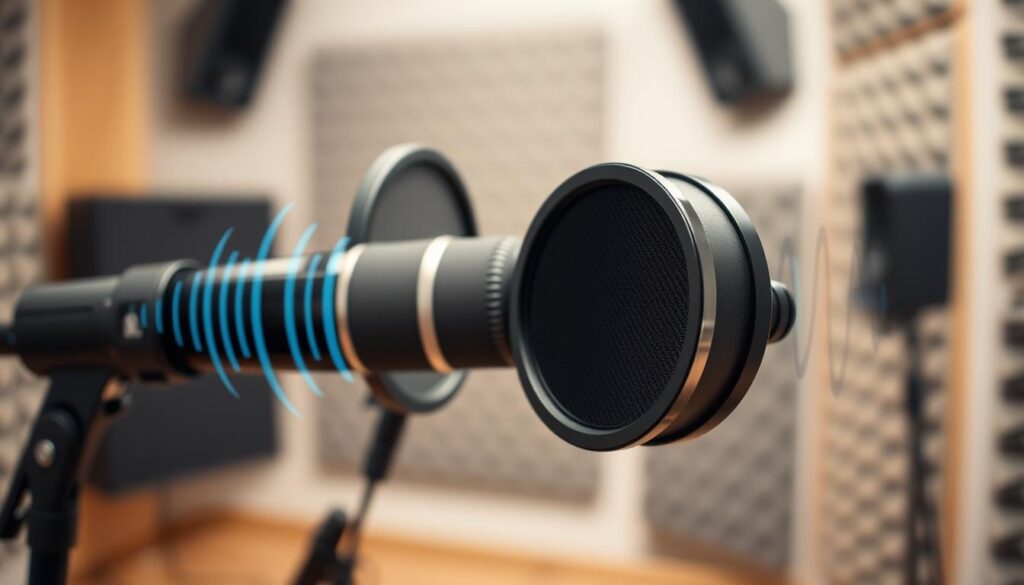
In my experience, pop filters are key to clear speech in recordings. They reduce the harsh sounds from “p” and “b” sounds. This makes audio quality better for voice-overs, podcasts, and music.
Vocalists worldwide see the value of pop filters in their studios. They help keep music and speech clear. This makes listeners enjoy recordings more.
Using a pop filter also keeps microphones clean. It stops saliva, hair, and skin from getting in. This is important for keeping sound quality up.
For those watching their budget, using a sock as a pop filter is a good idea. It’s easy to set up and protects against moisture. But, it’s not as good as a real pop filter for sound quality.
| Aspect | With Pop Filter | Without Pop Filter |
|---|---|---|
| Plosive Sounds | Minimized | Prominent |
| Audio Clarity | High | Muted |
| Microphone Protection | Effective | Negligible |
| Listener Engagement | Improved | Reduced |
Getting a pop filter is a simple but effective way to improve speech clarity in recordings.
Types of Pop Filters Available
Improving audio quality in recording sessions is key. Knowing the different types of pop filters is crucial. Nylon mesh and metal pop filters are the main types. Each has its own features that affect how well they work in various recording settings.
Nylon Mesh Pop Filters
Nylon mesh pop filters are a cost-effective choice. They’re popular among beginners and those in home studios. These filters use two layers of nylon to reduce plosive sounds. They cost between $18.99 and $30.00, offering a good value.
However, nylon pop filters can be fragile. This might impact the quality of high-frequency sounds during recordings.
Metal Pop Filters
Metal pop filters are becoming more popular among professionals. They’re durable and keep sound quality high. These filters have a thin metal layer that can handle more wear and tear.
Even though they’re smaller, metal pop filters preserve high-frequency sounds well. They’re a top choice for those who value clear audio. High-end models like the Avantone PS-1 Pro Shield and the Stedman Proscreen XL Metal Pop Filter cost between $45.00 and $99.00. They’re seen as a worthwhile investment for serious audio engineers.
Recording studios benefit from both nylon and metal pop filters. It’s important to place them 4 to 5 inches from the microphone for the best sound. Using pop filters with windscreens can tackle various acoustic challenges. Knowing the differences between these filters helps in making the right choice for your recording needs.
Integrating Pop Filters in Your Studio Setup
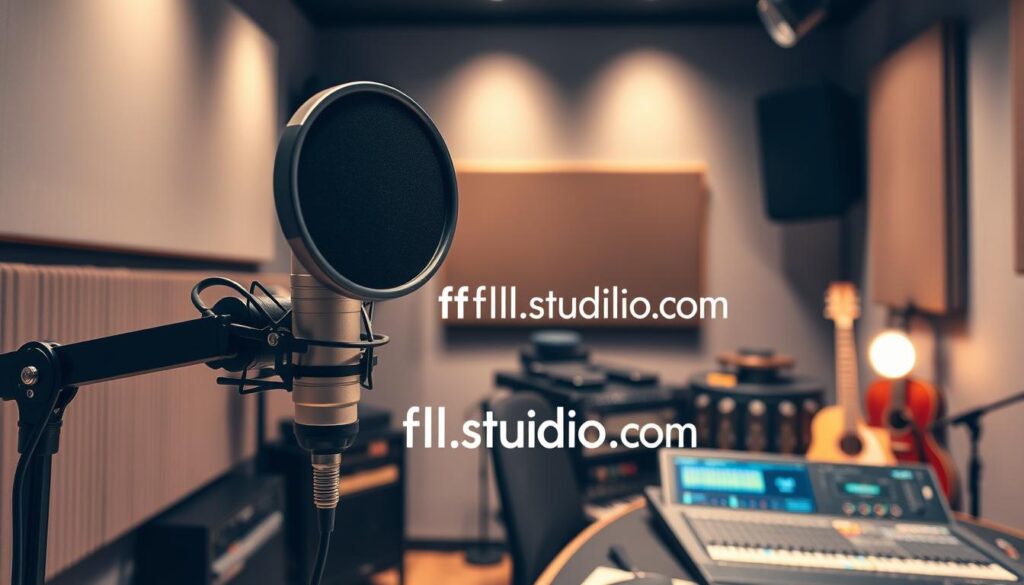
Adding pop filters to my studio has really improved my audio quality. It’s important to place them 2-3 inches from the mic. This stops plosive sounds that could mess up the sound.
I’ve found that a good mount is key. It keeps the pop filter steady, which is important for clear recordings.
Different pop filters have their own perks. The Stedman Proscreen XL is great for keeping things clean and clear. On the other hand, the Blast Pad can let some sounds through. The Pauly Ton is known for keeping the sound stable and clear, which is important for me.
Knowing about the different pop filters helps me choose the right one. Here’s a comparison of their features:
| Pop Filter Model | Key Features | Pros | Cons |
|---|---|---|---|
| Stedman Proscreen XL | Effectiveness, Easy cleaning | Reliable performance | Higher price point |
| Blast Pad | Transparent design | Lightweight, portable | May not block all pops |
| Pauly Ton | Stays in place, preserves clarity | Excellent for low frequencies | Limited availability |
| Metal Pop Filters | Superior durability | Retain high frequencies | Corrosion risk if wet |
| Nylon Mesh Pop Filters | Absorb and disperse air | Affordable, lightweight | Less durable than metal |
Using a pop filter has really helped my recordings. It cuts down on plosive sounds and keeps my vocals clear. The right pop filter is a must-have for anyone serious about their audio.
Tips for Properly Using a Pop Filter
Using a pop filter can greatly improve your audio recordings. It’s especially important for achieving professional sound quality. Here are some tips to enhance your recording sessions.
First, the *placement* of the pop filter is crucial. Place it about two to three inches from the microphone. This distance helps absorb sound, especially plosives that can distort audio. Keeping the pop filter 2 to 6 inches from the mic reduces plosives and sibilance, making recordings clearer.
Also, think about the vocal style you’re recording. Louder voices might need a closer pop filter, while softer voices can stick to the standard distance. Experimenting with different distances can help find the perfect setup for your recording needs.
Cleaning the pop filter is essential. Clean it weekly or bi-weekly to avoid germs from saliva. A clean pop filter not only protects your equipment but also keeps sound quality high.
When picking a pop filter, the material matters. Metal filters offer clear high frequencies but are pricier. Nylon mesh filters are cheaper but harder to clean. Knowing these differences helps choose the right accessory for your setup.
Lastly, don’t be afraid to try different pop filters. The right one can greatly enhance your recordings, fitting your voice and recording style perfectly.
| Tip | Description |
|---|---|
| Placement | Position 2 to 3 inches from the microphone for best results. |
| Distance | Maintain 2 to 6 inches between the pop filter and microphone. |
| Vocal Consideration | Adjust distance based on vocal strength; louder voices may need to be closer. |
| Maintenance | Clean pop filter weekly or bi-weekly to avoid saliva buildup. |
| Material Choice | Consider metal for durability and clarity, or nylon for cost-effectiveness. |
| Experimentation | Try different filters to find the best fit for your voice. |
Can You Make Your Own Pop Filter?
Making a DIY pop filter is a fun project that can improve your audio quality. You can use simple materials like a wire coat hanger. Bending it into a circle makes it easy to attach materials for the filter screen.
Other materials like an embroidery hoop or a coffee can lid work well too. You can use pantyhose or nylons for the filter screen. These are easy to find and use. Socks can also be used, but they might not sound as good.
DIY pop filters are great at reducing loud sounds and popping noises. They make recordings clearer. Socks are cheap, easy to carry, and simple to clean. But, they might not be as clear as store-bought ones. Thin socks work best for this.
Here’s a quick comparison of various DIY pop filter options:
| Materials | Cost-Effectiveness | Sound Quality | Ease of Setup |
|---|---|---|---|
| Wire coat hanger + pantyhose | High | Good | Easy |
| Embroidery hoop + mesh | Medium | Very good | Moderate |
| Coffee can lid | High | Moderate | Easy |
| Sock | Very high | Variable | Very easy |
Using cheap clamps to hold the pop filter in place is a good idea. Singing or speaking a bit away from the mic helps too. Making your own pop filter is a fun and affordable way to improve your audio setup.
Conclusion
Using pop filters can greatly improve your audio quality. They help reduce plosive sounds and protect your microphones. This keeps your equipment in good shape for longer.
Pop filters also make sure your sound is clear. This makes your audio projects sound more professional. It’s a key part of making great recordings.
There are many types of pop filters, like nylon mesh and metal ones. Metal pop filters are popular because they’re durable and easy to clean. They’re great for anyone who records audio, whether you’re experienced or just starting out.
Adding a pop filter to your recording setup can make things easier. It means you won’t have to spend as much time editing your audio later. It’s a simple way to improve your recordings.
The benefits of using pop filters are clear. They make your voice sound clearer and your recordings better. Next time you record, think about using a pop filter. It will help you get the best sound possible.
FAQ
What does a pop filter device filter out?
A pop filter mainly stops plosive sounds. These are sudden sounds from consonants like ‘P’ and ‘B’. It also cuts down on saliva splatter, protecting microphones and making audio better.
Why is a pop filter important for voice recording equipment?
A pop filter is key for voice recording gear. It stops plosive sounds and makes speech clearer. This results in cleaner, more professional audio.
How does a pop filter improve audio quality?
A pop filter greatly improves audio quality by cutting down on unwanted noise. It makes vocal tracks clearer. This is crucial for professional recordings, podcasts, and voice-overs.
What types of pop filters are available?
There are mainly two types of pop filters. Nylon mesh filters are affordable and work well. Metal filters are durable and keep more high-end frequencies in recordings.
How should I position a pop filter in my studio setup?
The pop filter should be 2-3 inches from the microphone. This distance creates a barrier against plosives. Make sure it’s mounted well to avoid shaking during recordings.
What are some tips for using a pop filter effectively?
Place the pop filter about a fist’s length from the microphone. The volume of your vocals affects the best position. Also, keep the filter clean and well-maintained.
Can I make my own pop filter?
Yes, you can make a DIY pop filter. Use a wire coat hanger and pantyhose. It’s a cheap and easy way to start or fix a quick problem.
Source Links
- https://www.audiomentor.com/beginner/what-is-a-pop-filter-really-for/
- https://emastered.com/blog/what-is-a-pop-filter
- https://en.wikipedia.org/wiki/Pop_filter
- https://help.harmanpro.com/what-is-a-pop-filter-for
- https://www.synthax.co.uk/latest/2016/05/12/why-pop-filters-are-important-for-quality-recording/
- https://gadgetspage.com/pop-filters/
- https://www.linkedin.com/advice/0/why-should-you-use-pop-filter-your-recording-studio-caqpc
- https://bunnystudio.com/blog/what-is-a-pop-filter-and-why-should-you-use-one/
- https://improvepodcast.com/pop-filter-vs-foam-cover/
- https://riverside.fm/blog/best-pop-filter
- https://medium.com/@syedimranhaider_19903/why-is-a-pop-filter-necessary-for-live-performance-98059743df37
- https://gearspace.com/board/so-much-gear-so-little-time/1321687-should-we-all-aiming-do-away-pop-filter.html
- https://gearspace.com/board/so-much-gear-so-little-time/1312396-whats-best-vocal-pop-filter.html
- https://www.gearank.com/what-does-a-pop-filter-do/
- https://gearspace.com/board/so-much-gear-so-little-time/1045037-metal-pop-filter-really-worth.html
- https://improvepodcast.com/how-to-set-up-a-pop-filter/
- https://www.wikihow.com/Make-a-Pop-Filter
- https://myelearningworld.com/sock-as-a-pop-filter/
- https://www.hysonetch.com/an-introduction-to-microphone-pop-filter/
- https://www.hollyland.com/blog/tips/choose-the-right-pop-filter-for-mics
- https://www.hawkpro.in/the-ultimate-guide-to-pop-filters-why-theyre-essential-for-your-recording-setup/