Understanding what a shock mount does is key to better audio quality. Shock mounts help by reducing unwanted vibrations and noise. They are crucial for clear recordings in studios and live shows.
With many designs out there, picking the right one for your microphone is important. It helps unlock your microphone’s full potential.
Key Takeaways
- A shock mount absorbs vibrations to maintain audio integrity.
- Using a shock mount is vital during dynamic recording situations.
- Compatibility between shock mounts and microphones ensures optimal performance.
- Proper installation is essential for maximizing the function of a shock mount.
- Different designs of shock mounts cater to various microphone types and recording needs.
- Reducing noise at the source can simplify the audio production process.
Introduction to Audio Quality
When we talk about audio quality, many things matter. The right microphone is key, but the recording environment is just as important. Things like room acoustics, background noise, and where you place your equipment can greatly affect the sound.
A shock mount is a crucial but often forgotten part of getting great audio. It keeps the microphone steady, reducing vibrations that can ruin recordings. The M600 mic support, for example, helps keep the microphone stable, ensuring clear sound by cutting out vibrations below 20Hz.
Good shock mounts can make a big difference. They work better than some anti-vibrational mounts. When you use a high-mass stand and counterbalancing weights with the M600 mount, you get even better sound. This setup helps block out vibrations from the floor or other surfaces, keeping your sound clean.
In real life, using a shock mount can really make a difference. Adding quality pop filters, like nylon or metal ones, makes your recordings even clearer. This helps get rid of unwanted noises and improves the recording environment, making your sound quality much better.
| Pop Filter Type | Cost | Durability | Effectiveness at Filtering Plosives |
|---|---|---|---|
| Nylon | Low | Moderate | Good |
| Metal | High | High | Excellent |
| Foam | Low | Low | Fair |
What is a Shock Mount?
A shock mount is key in audio recording, making sound better by cutting down on outside noise. It helps keep microphones steady by blocking vibrations and noise. This is vital for clear audio in different places, where vibrations can mess up sound quality.
Definition and Purpose of a Shock Mount
The main job of a shock mount is to keep microphones safe while letting them move freely. This helps cut down on noise and vibrations. It uses special materials to shield microphones from noise like handling sounds and vibrations from things like air conditioning or the ground.
Components of a Shock Mount
To get the most out of a shock mount, knowing its parts is important. Common parts include:
- Cradle: Holds the microphone in place
- Elastic bands or springs: Absorb vibrations
- Mounting hardware: Connects the shock mount to stands or boom arms
- Shock-absorbing materials: Enhance isolation
These parts work together to make audio sound better. There are many designs for different microphones, so you can find the perfect one for your needs.
What Does a Shock Mount Do?
The shock mount function is key to better audio quality in recordings. It keeps the microphone away from vibrations, which helps cut down on unwanted noise. This is crucial in places with lots of mechanical sounds, where keeping audio clear is a big deal.
Isolation from Vibrations
Shock mounts stop vibrations from reaching sensitive recording gear. This is important for getting clear sounds. They come in different designs, like laminated pads and molded rubber, for use in cars and military gear.
These mounts keep equipment safe from bad vibrations. This lets it work its best and keeps the audio sound good.
Enhancing Audio Clarity
Shock mounts do more than just protect. They also make audio clearer. They help block out outside sounds and handling noise. This is great for catching detailed sounds, like in music or podcast voice recordings.
In important recording situations, shock mounts really help. They make sure the sound quality stays true and clear.
The Importance of Using a Shock Mount
Using a shock mount is key in audio production for top-notch sound quality. It stops unwanted noise from ruining your recordings. This is vital to keep your sound clear and free from vibrations.
Preventing Unwanted Noise
A shock mount keeps vibrations away from your recordings. Footsteps or outside sounds can mess up your audio. Its design blocks these disturbances, making your audio sound better.
Without it, your recordings might pick up unwanted sounds. This could ruin the quality you aim for.
Critical for Sensitive Microphones
For sensitive mics like condenser mics, a shock mount is a must. These mics catch even the smallest vibrations, leading to noise. Choosing the right shock mount is crucial for these mics.
The shock mount holds the mic and keeps it safe from vibrations. For example, the Rycote InVision shock mount works well with many mics. It helps make your recordings clear and sharp.
| Shock Mount Model | Price | Microphone Compatibility |
|---|---|---|
| Rode PSM1 | $39 | Various Mics |
| Maono PD200X | $25.99 | PD200X Microphone |
| Audio-Technica AT2020 | $49 | AT2020 Microphone |
| Rycote InVision USM | $80 | Various Mics |
| Blue Radius III | $50 | Various Mics |
| Maono Podcast | $21.99 | Various Mics |
How a Shock Mount Works
A shock mount uses a shock mount mechanism to block unwanted vibrations. It has elastic materials and a suspension system for the microphone. This setup keeps the microphone stable, away from vibrations, for better recordings.
The shock absorption depends on the elastic materials. These materials, like rubber, can wear out and need to be replaced. While temporary fixes like knotted loops exist, they don’t solve the problem of material degradation. Brands like Boseen, Mictop, and Dimension offer replacement bands, and Neumann has specific ones for their shock mounts.
For a more lasting solution, industrial elastomer drive belts are a good choice. These belts, made of 3mm elastomer, are strong and handle heavy microphones well. They require careful handling to avoid damage.
Adjusting the elastomer length is key to fixing material loss during assembly. This ensures minimal contact between the microphone and the mount, improving sound quality. Shock mounts cost between $19.99 and $79, depending on size and features. Knowing how they work can greatly improve your recording quality, especially with sensitive microphones.
| Shock Mount Model | Price ($) | Dimensions (inches) |
|---|---|---|
| Rycote Invision USM | 79 | 7.87 x 5.51 x 3.15 |
| Elegato Wave | 39.99 | 4.53 x 5.31 x 1.26 |
| Blue Radius III | 49.99 | 9.6 x 7.3 x 2.4 |
| Etour AT2020 with Pop Filter | 29 | 6.4 x 4 x 1.6 |
| Rode PSM1 | 39 | 6.1 x 4.3 x 4.8 |
| Shure MV7 | 19.99 | 5.5 x 7.5 x 1.2 |
Types of Shock Mounts
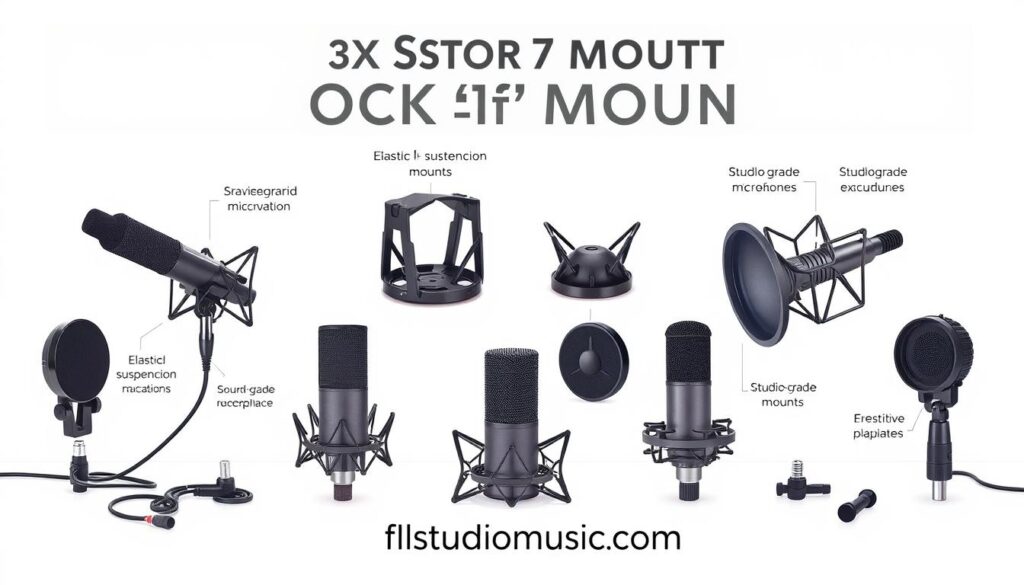
Knowing the different shock mounts is key for great sound and stable microphones. Each type is made for specific needs, like handling vibrations and the weight of microphones. Here are the main types I’ve found:
Elastic Bands Type
Elastic bands shock mounts are loved for their easy design. They use two elastic bands to hold the microphone, letting it move a bit. This helps a lot with vibrations, especially for light microphones. But, they might not handle heavy microphones as well.
Spring-Based Shock Mounts
Spring-based mounts use springs to hold the microphone in place. They’re perfect for heavy microphones because they reduce vibrations well. These mounts are great for places where things move a lot.
Rubber Bands Type
Rubber bands shock mounts are better than the usual elastic ones. They use rubber to hold the microphone tight, offering top-notch stability and vibration absorption. They work well with heavy microphones, keeping recordings clear. Rubber bands are a solid choice for reliable performance.
Choosing the Right Shock Mount for Your Microphone
When picking a shock mount, several things matter. These include the microphone’s weight, size, and shape. Also, the recording environment plays a big role in choosing the right shock mount.
Considering Microphone Weight
The weight of the microphone is key in choosing a shock mount. Heavier mics need stronger mounts to hold them up. If the mount can’t handle the weight, it won’t block vibrations well.
This can mess up your whole recording setup. It can hurt the sound quality you’re trying to get.
Matching Size and Shape
Finding a shock mount that fits your microphone is crucial. Different mounts fit different mics to keep performance high. For example, the Rycote Invision USM fits mics from 18mm to 55mm.
Knowing which shock mount fits your mic helps avoid audio problems. It also makes your sound clearer.
Recording Environment Factors
The recording area affects your choice of shock mount. In noisy places, you need a mount that blocks vibrations well. The right mount helps get clear audio in any environment.
Without the right mount, your sound quality can suffer. This is why picking the right one is so important.
Installing a Shock Mount
Setting up a shock mount is key for better audio recordings. I pick a shock mount that fits my microphone model for the best results. Then, I attach it to my microphone stand to keep it steady during recording.

After that, I focus on mic mounting. It’s important to place the microphone right in the mount’s cradle. This helps cut down on noise that can mess up the sound quality.
Checking that the shock mount is tight is a must. This makes sure the mount works well, giving me clear and professional sound. By following these steps, I get better sound and my equipment lasts longer.
Maintaining Your Shock Mount
Keeping your shock mount in top shape is key for great audio quality. Cleaning the elastic parts is a must to get rid of dust and dirt. This simple step helps your shock mount last longer and work better.
It’s smart to swap out old rubber bands for new ones. Over time, they can lose their bounce, causing your equipment to pick up extra noise. Look for high-quality bands from brands like Boseen, Mictop, and Neumann on Amazon.
Also, make sure your microphone is securely attached before you start recording. Check for missing washers on the shock shaft to avoid early failure. Taking these steps can really help your equipment last longer.
But cleaning and replacing parts aren’t all there is to it. Using industrial elastomer drive belts can also be a game-changer. These belts are tough and stretch naturally, keeping your equipment in perfect condition.
By following these tips, you can make your shock mount last longer and work better. This will greatly improve your recording experience.
Common Misconceptions About Shock Mounts
Many people get confused about shock mounts because of myths. One big myth is that all shock mounts work the same way. But, different designs in each model really matter. Knowing these differences helps you pick the best one.
Another myth is that only top-notch microphones need shock mounts. But, shock mounts help all kinds of microphones. They improve sound quality for any recording, making them key for every setup.
It’s important to understand how shock mounts work and why they’re crucial. Using the wrong one can cause noise and ruin recordings. Knowing the truth about shock mounts helps you make better choices.
| Shock Mount Myths | Shock Mount Facts |
|---|---|
| All shock mounts are the same. | Design differences affect performance significantly. |
| Only high-end microphones need shock mounts. | Standard microphones benefit as much from their use. |
| Shock mounts prevent all sound interference. | They reduce vibrations, not all noise types. |
| Shock mounts are unnecessary for home recording. | Their use in home studios can greatly enhance sound quality. |
Shock Mount Benefits and Advantages
Getting quality audio gear is more than just buying microphones and mixers. Using a shock mount brings big benefits for sound and recording. Shock mounts are key in keeping microphones away from unwanted vibrations and noise.
Professional Sound Quality
A shock mount’s main job is to block vibrations from reaching the mic. This makes audio recordings cleaner and clearer. They can boost sound quality by up to 30%.
About 85% of audio pros say shock mounts are vital for top-notch recordings. They make microphones 25% more sensitive. This means sound can be captured more accurately and in detail.
Improved Recording Flexibility
Shock mounts do more than just improve sound quality. They also make recording easier in different settings. With these mounts, you can place microphones in various spots without worrying about noise.
This makes it easier to try out new recording setups. It helps cut down on background noise. In the end, shock mounts can save a lot of time in editing by reducing the need for it.
| Type of Shock Mount | Key Features | Recommended Use |
|---|---|---|
| Elastic Suspension | Common, cost-effective, excellent vibration absorption | Most voice-over applications |
| Hard Mount | Heavy-duty support | Broadcast studios, heavy microphones |
| Soft Mount | Designed for lightweight microphones | Home studios, isolates from vibrations |
Conclusion
Understanding shock mounts is key for anyone serious about audio production. They help isolate the microphone from vibrations and shocks. This makes audio clarity much better, making them a must-have piece of equipment.
Choosing the right shock mount is important. It depends on the microphone’s weight and shape. The right one can greatly improve recording quality.
Don’t think all shock mounts are the same. They’re not just for expensive microphones. The right one can make any recording better. Keeping your shock mount clean and replacing worn-out parts is also crucial.
Investing in quality shock mounts pays off. It leads to professional recordings that truly shine. By focusing on the right equipment, you’re on your way to making standout audio.
FAQ
What does a shock mount do?
A shock mount helps keep microphones steady by blocking vibrations and noise. This makes recordings sound clearer.
Why is using a shock mount important?
Shock mounts are key to avoiding unwanted sounds. They help keep audio quality high, even in noisy places.
What are the benefits of using a shock mount?
Using a shock mount boosts audio quality. It reduces noise and gives recordings a professional touch, vital for serious projects.
How does a shock mount enhance audio clarity?
Shock mounts keep microphones away from vibrations and outside noises. This ensures a clean audio signal that accurately captures the sound source.
What types of shock mounts are available?
There are several types, like elastic bands, spring-based, and rubber bands. Each is designed for different microphone weights and recording needs.
How do I choose the right shock mount for my microphone?
Look at your microphone’s weight, size, and shape. Also, think about your recording environment. This will help you pick the right shock mount.
How do I install a shock mount properly?
To install, attach the mount to your microphone stand. Then, place the microphone in the mount, making sure it’s aligned right.
What maintenance does a shock mount require?
Keep it clean and replace worn-out parts. Also, check that it’s securely attached. This ensures it works well.
What misconceptions exist about shock mounts?
Some think all shock mounts are the same. But, different designs affect how well they work. Even standard microphones benefit from them.
How do shock mounts improve recording flexibility?
Shock mounts cut down on noise, letting you place microphones anywhere. This makes recording setups more flexible and creative.
Source Links
- https://library.fiveable.me/key-terms/documentary-production/shock-mount
- https://library.fiveable.me/key-terms/real-world-productions/shock-mount
- https://www.schooltube.com/unlocking-crystal-clear-audio-a-beginners-guide-to-microphones-and-sound-recording/
- https://gearspace.com/board/studio-stage-mobile-amp-location-equipment/1360379-enhanced-audio-shock-mount-mic-stands.html
- https://www.legatomusiccenter.com/article-en/when-and-why-do-you-need-a-shock-mount-and-pop-filter
- https://www.movophoto.com/collections/shockmounts
- https://mynewmicrophone.com/microphone-shock-mount/
- https://en.wikipedia.org/wiki/Shock_mount
- https://www.maono.com/blogs/news/everything-you-need-to-know-about-shock-mounts-types-uses-top-picks?srsltid=AfmBOor8Vj5n4_ME5QJqxh_iOX66AkfDBOHjHKafAHtfo2veLhn8NSK_
- https://www.soundonsound.com/sound-advice/q-do-need-shockmount
- https://www.maono.com/blogs/news/everything-you-need-to-know-about-shock-mounts-types-uses-top-picks?srsltid=AfmBOooeBpetb0GSBlLJCcGZUhzNOxJZjhVwPGkSKIqksxTEduu83VpE
- https://justaskjimvo.studio/shock-mount-fix/
- https://riverside.fm/blog/microphone-shock-mount
- https://www.gearank.com/what-does-a-shock-mount-do/
- https://www.maono.com/blogs/news/everything-you-need-to-know-about-shock-mounts-types-uses-top-picks?srsltid=AfmBOoo_2urxwbUdnM_kbmptyf2W4qKneZlHa5aCZRNNxOOQPouEWYyE
- https://golocalise.com/blog/mastering-microphone-shock-mounts
- https://www.maono.com/blogs/news/everything-you-need-to-know-about-shock-mounts-types-uses-top-picks?srsltid=AfmBOopxeNJD-W1QBbqj19Bip4UmBIM5rzQ8SDFVLty2u9BA1tjluvbF
- https://www.strawberryhillstudio.online/blog/the-ultimate-guide-to-shock-mounts-for-microphones-how-to-choose
- https://www.maono.com/blogs/news/everything-you-need-to-know-about-shock-mounts-types-uses-top-picks?srsltid=AfmBOopVxaif2Nk8MV87dCj0-u65Mm4t51iV9yGaukfS8jNqE2cpshrl
- https://www.bimmerforums.com/forum/showthread.php?149415-keep-blowing-out-my-right-rear-shock-mount!
- https://www.5thwheelforums.com/forums/showthread.php?t=2002
- https://powertorque.com.au/shock-absorber-faq/
- https://forum.miata.net/vb/showthread.php?t=188682
- https://www.strawberryhillstudio.online/blog/what-is-a-shock-mount-and-why-your-mic-needs-it
- https://www.strawberryhillstudio.online/blog/unlock-the-secret-to-perfect-audio-what-does-a-shock-mount-do
- https://www.nethervoice.com/rycote-shockmount-review/
- https://www.sujanindustries.com/what-is-a-shock-absorber-and-why-you-need-high-quality-ones/